Score: 75/100
Great
- Developer: Fumi Games
- Platform Played: PS5
- Playtime: 18 hours
- Genre: Indie noir FPS
The Verdict: While its gameplay and narrative may not live up to the standard set by its design, Mouse still stands out as an exceptional artistic achievement with a well-realized rubber-hose aesthetic that is deliciously novel.
Highlights
- Excellent aesthetic with great audio & visual styles
- Strong voice acting performances
- Fast-paced, responsive gunplay
Lowlights
- Weak story & narrative
- Lack of side content & replayability
- Gameplay loop becomes repetitive quickly
Ever since the 2017 release of Cuphead gamers have waited for another title to combine the magic of classical animation with smooth, modern gameplay. Luckily, the wait is over as Mouse: PI For Hire has succeeded in creating a gorgeously hand-drawn FPS with snappy gunplay, excellent visual and audio design, and more cheese-based puns than you can count. Despite some repetitive gameplay, a lack of replayability, and a mediocre story, Mouse delivers a level of artistic execution and originality rarely seen in games today.
Mouse follows the story of hard-boiled detective Jack Pepper. A good-hearted PI trying to help his community while plagued by PTSD and the ever-present influence of a fascist regime. Jack is recruited to investigate a missing persons case which quickly spirals into a web of crime involving Lovecraftian cultists, crooked cops, and a shrew trafficking ring. The resulting conspiracy sends Jack throughout the city of Mouseburg to find clues and shoot his way through the multitude of mice, robots, and monsters that stand against him.
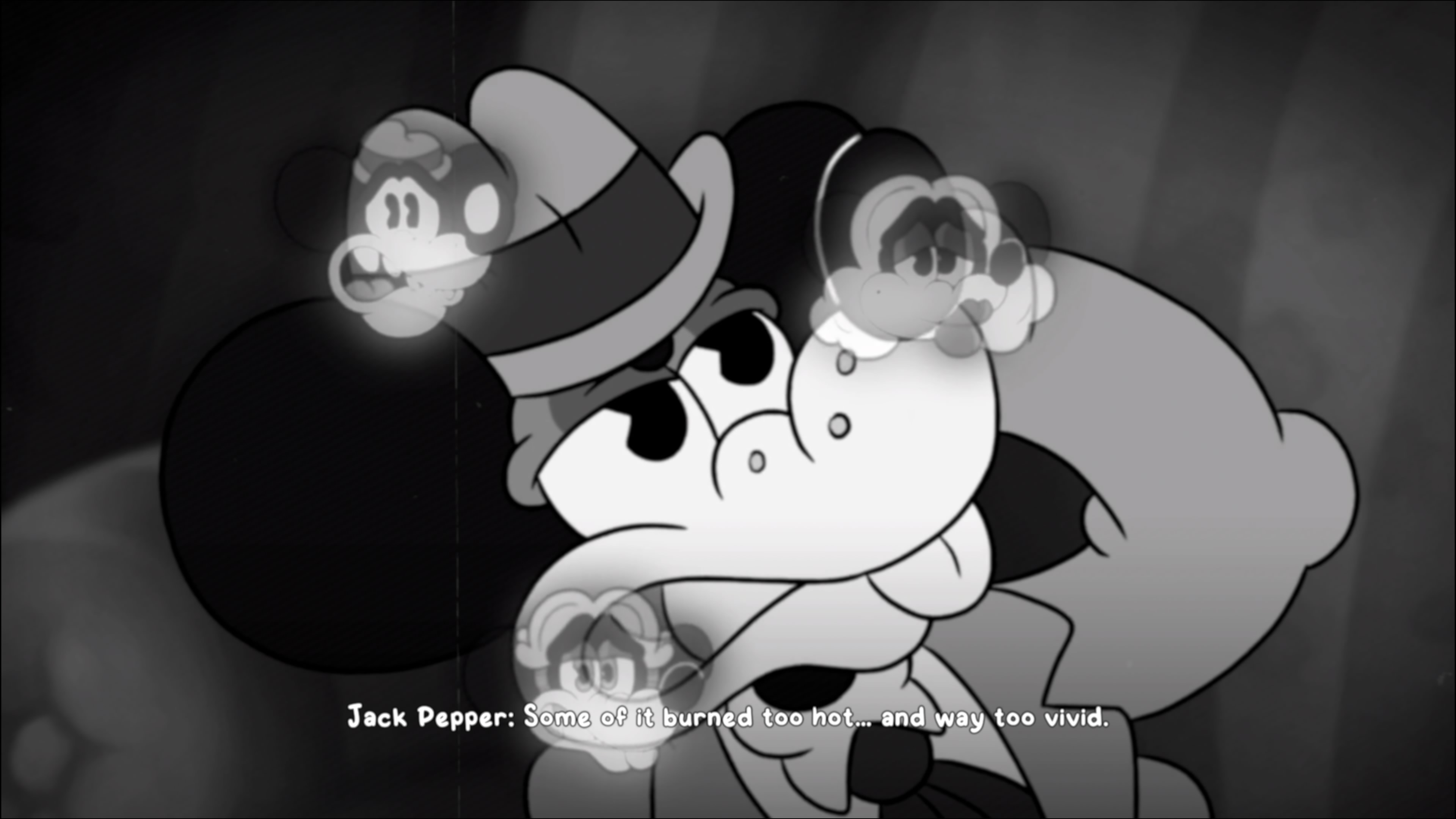
Jack Pepper is voiced by Troy Baker (of Last of Us and BioShock Infinite fame) and spends a lot of time waxing poetically about the mysteries of life in true noir fashion.
Despite excellent voice acting and a handful of memorable characters this story never becomes especially thoughtful or articulate. There are some brief allusions to real world issues of inequality and corruption, but they are never elaborated on in a way that is poignant. The mystery solving plot instead becomes a backdrop for boomer shooting action wherein Jack fights through hordes of enemies before happening upon a clue and connecting it to the rest of the mystery. Luckily this lack of a compelling narrative isn’t a major problem due to Mouse‘s choice to embrace the concept of an absurd, dairy-obsessed reimagining of the 1930s noir genre populated by rodents.
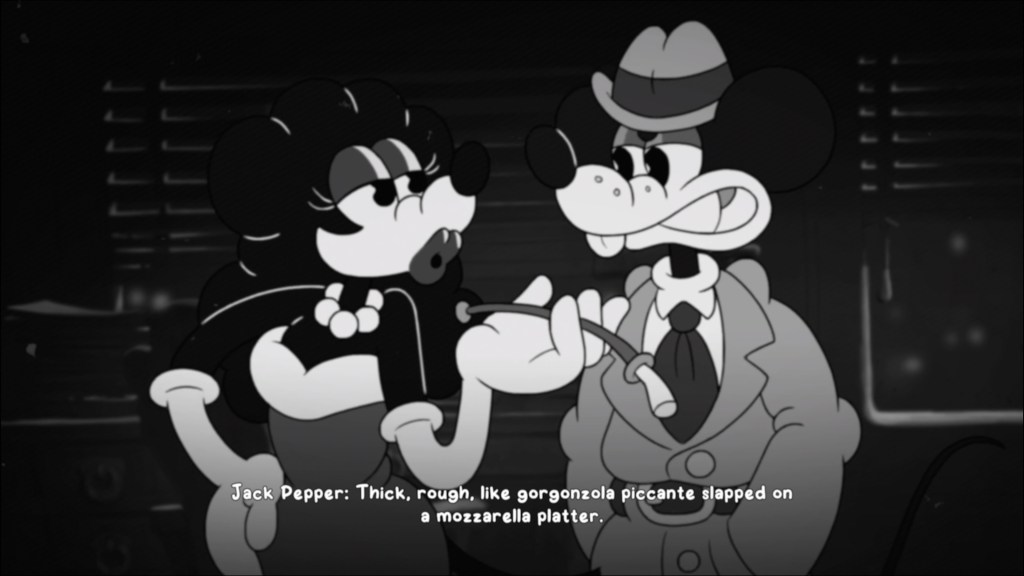
This results in an exceptionally cheesy game that never takes itself too seriously. Drugs & alcohol are replaced by blue cheese & fondue respectively, necessitating the presence of cheeseleggers to distribute these products. Character accents consistently lampoon noir films of old from the inconsistent french accent of Vivian McCarthys femme fatale to the unceasingly gruff, Bogart-adjacent Jack Pepper. Enemies die in cartoonishly gruesome ways depending on the weapon used, being reduced to skeletons, turning into piles of ash, or being flattened from a falling anvil or piano. It might all be a bit too absurd if not for animation and music that make the game feel natural and authentic at all times despite the ridiculousness of its world.
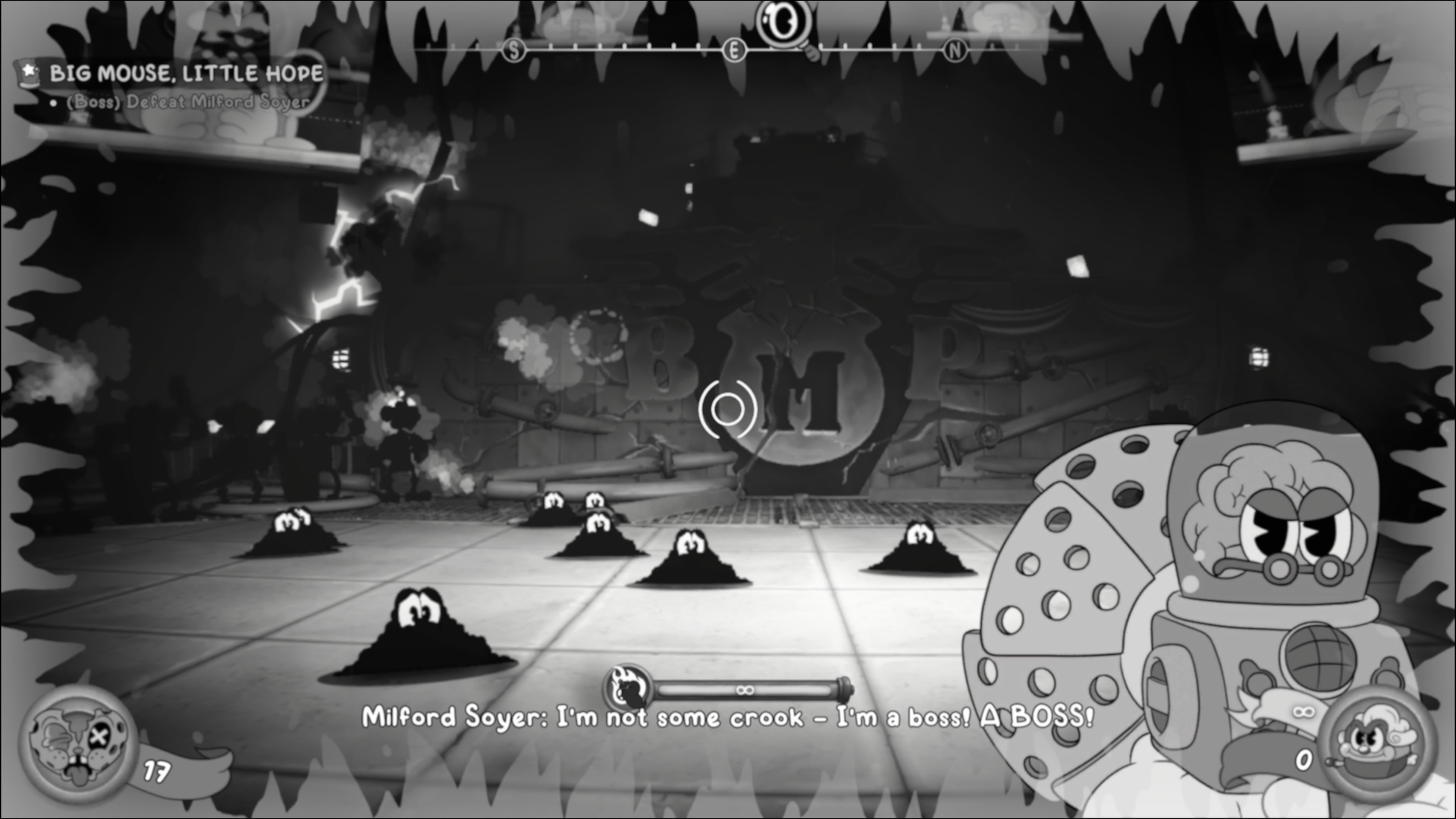
Guns like the “Jar-Head” eschew conventional firearms for a more sci-fi, cartoonish take on combat which leaves enemies disintegrated rather than full of holes.
Mouse‘s sound design is particularly impressive. The soundtrack is an inspired combination of jazz & swing that changes tempo from the sultry to the satanic (literally) depending on the context. Guns whizz & pop satisfyingly from the corklike thump of the shotgun to the rhythmic hum of the James gun’s large clip. The same is true for enemies whose voicelines, movements, and weapons have unique tones and vibrations throughout. The level of audio polish here is astounding and often outshines the brilliance of the animation.
This is a game composed almost entirely of hand-drawn 2D assets and the level of care the animators put in is on full display. Characters are all uniquely designed, clad in period garb with a litany of body types and facial quirks. Guns shine out particularly as the rubber-hose animation style gives them a lifelike quality that makes each bounce and function uniquely as you traverse through levels. Backgrounds cover a variety of settings from film studios to haunted houses and are rendered in a drab gray that initially comes across as dull, but it makes the characters & interactable objects pop out so they don’t get lost in the fold. The visuals are consistently a feast for the eyes and make the combat, world, and characters much more interesting to engage with.
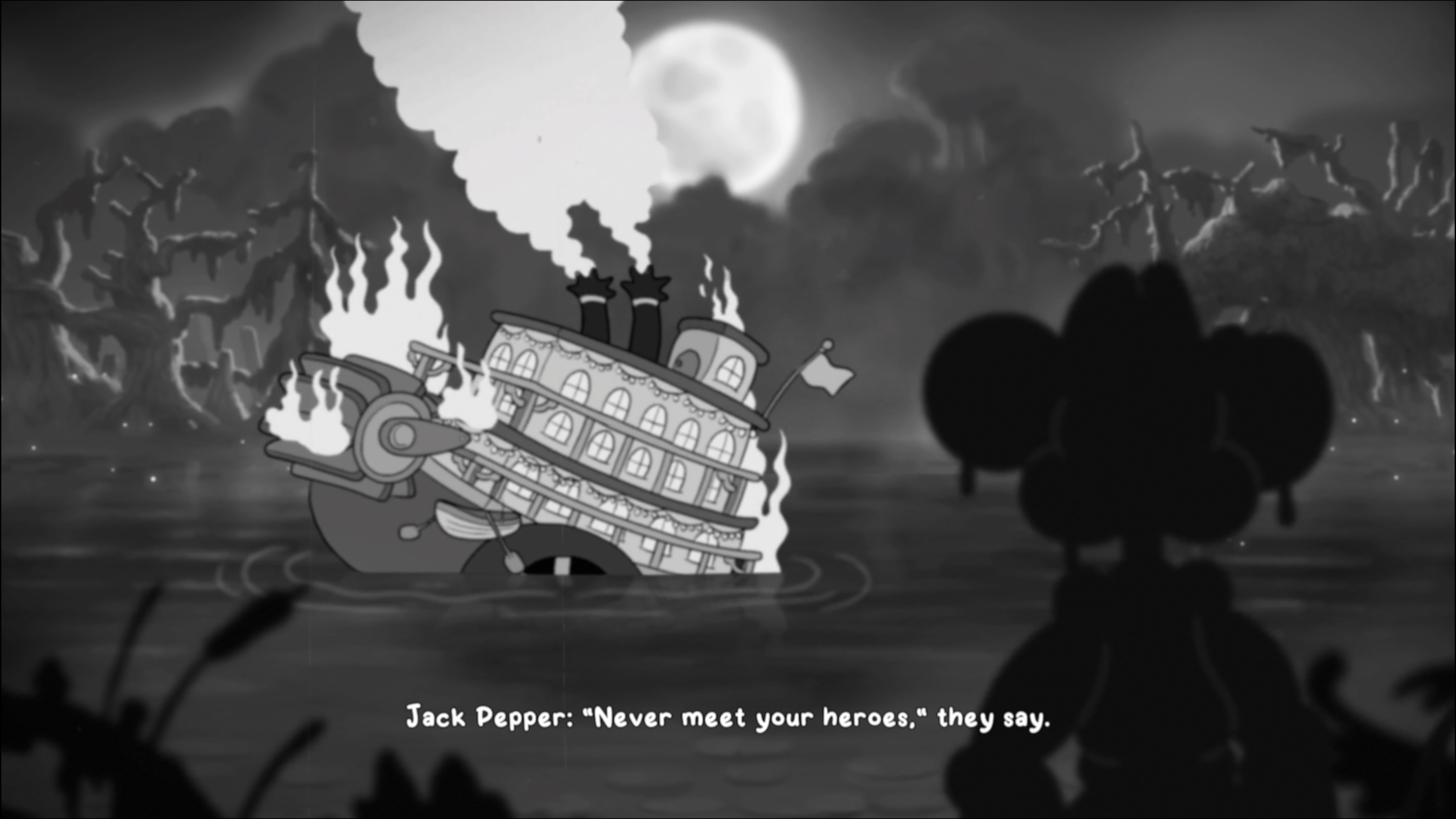
Cutscenes like this allow the visuals to really shine and do a great job of breaking up the regular flow of the game.
While this excellent artistry is laudable the rest of the game is relatively par for the course. Combat feels snappy and reactive with a variety of guns to try out but largely consists of mowing down groups of enemies, finding a clue, then returning to the hub and reviewing clues before being given the next objective. Most levels have bosses that offer a bit of a challenge, but they are still easily taken down and most fall into a predictable pattern of “whackamole” where the boss jumps out, shoots for a minute, and then disappears and pops up in a different part of the arena. Puzzle solving is similarly repetitive, typically consisting of finding a switch and pulling it which is never difficult or frustrating but lacks the originality present in the rest of the game. Initially all of this is fine but as the game continues the loop gets dull because of a lack of meaningful progression or side content.
Progression in Mouse is limited to upgrades or guns which you purchase by finding blueprints around levels. These upgrades are powerful, but the guns are already strong so after a handful of early blueprints Jack is more than capable of handling everything thrown his way. Combat is occasionally spiced up by single use items like a spinach can that allows Jack to channel his inner Popeye, but these happen randomly in levels and don’t do anything to make the combat feel more complicated or evolving. What could have been a very fun combat system is limited by a lack of depth and progression that doesn’t feel necessary to engage with.
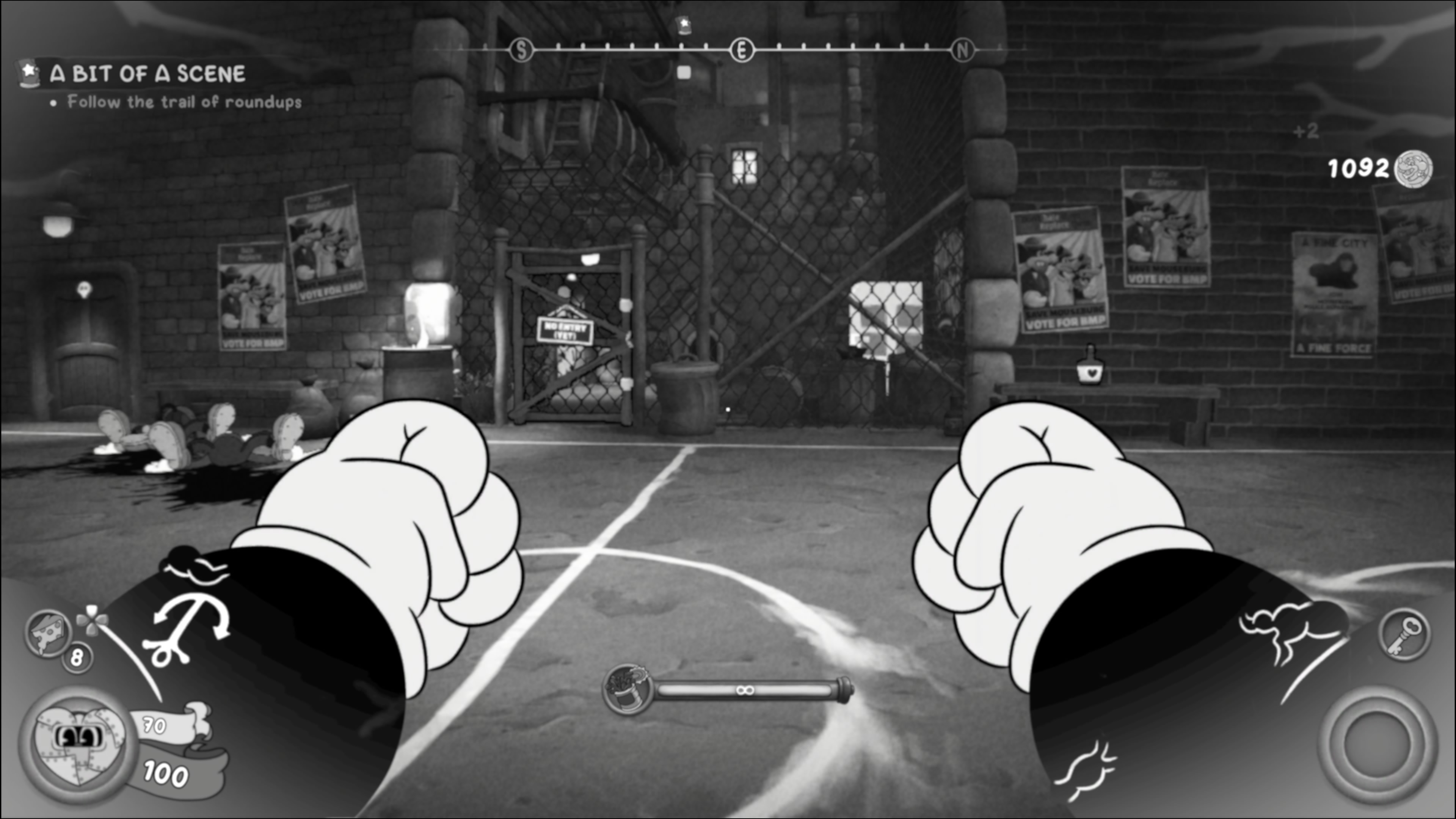
Powerups like the Popeye spinach transform the already powerful Jack into an unstoppable killing machine.
Side content is also not fleshed out enough and it was hard to feel motivated to fully engage with it. This content is divided into side requests from NPCs and collectibles littered around levels. NPC requests usually ask you to find something like a fondue recipe in a certain level (everything is about cheese) and offer small upgrades in return. However, since there is no way of replaying levels side quests disappear instantly if not achieved and have no impact on the rest of the game, so they end up feeling like an afterthought rather than a necessary part of the experience. This is made especially clear after the credits roll and there is no option to go back and complete missed side quests or replay levels at all aside from starting a new save file.
Collectibles are similar in that they are fun to collect and give a bit more context to the world of Mouseburg but don’t feel compelling enough to seek out and explore. These are divided into newspapers, comic strips, and baseball cards and range from easy to find locations to deeply hidden in the corners of levels. You can buy any collectibles you miss in the shop, which is a great feature for completionists, but it also clearly disincentivizes players from seeking out collectibles and exploring levels to the fullest.
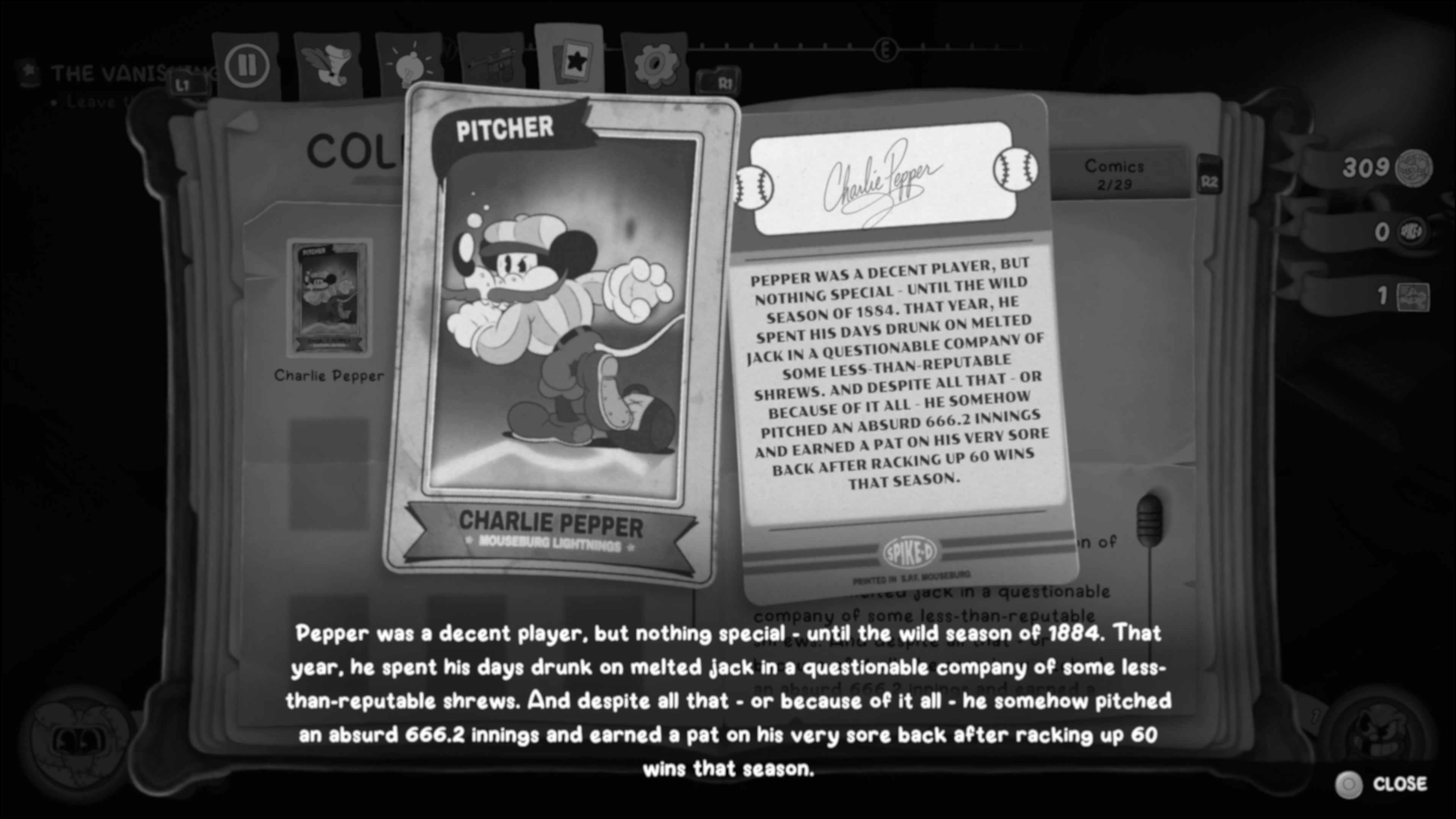
Baseball cards offer fun bios of the fictional players and can be found in levels or purchased in shops.
Baseball cards are the standout here as they can be used to play the baseball minigame in one of the bars found in the game. This is a fun minigame to play but its novelty quickly wears off because of its simplicity and the shallowness of its mechanics. The game is exceptionally easy with little depth and even though you get a special weapon for winning 20 rounds it is hard to feel excited to play after your third or fourth try. The newspapers and comic strips are short, quick reads that sometimes have a good gag or piece of lore but aren’t especially compelling to seek out.
The side content ends up being emblematic of Mouse: PI For Hire as a whole. It all looks great and is fun initially but after the novelty wears off there is not a lot of depth to continue exploring. When the credits rolled and it was revealed there was no type of end game to explore, I was disappointed but not surprised. While its gameplay and narrative may not live up to the standard set by its design, Mouse still stands out as an exceptional artistic achievement with a well-realized rubber-hose aesthetic that is deliciously novel. Its cheesiness and lack of tactical depth may be a turnoff for some, but its artistry, absurdity, and fast-paced gunplay should please those who fear that modern games are becoming too homogenous.
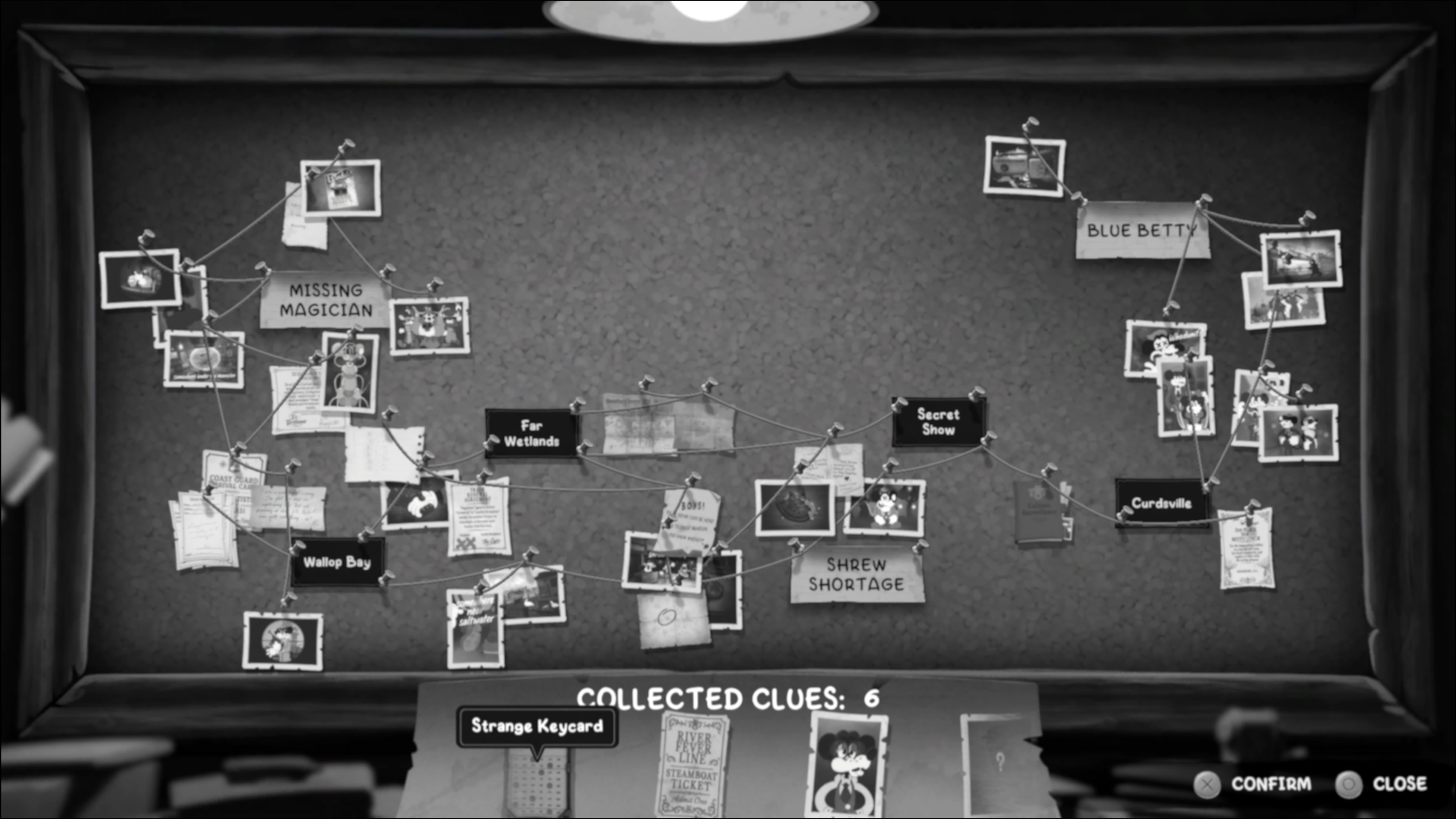
Pinning clues to the board and seeing them pile up over the course of the story is an interesting way to follow your progress.
Scoring Rubric:
| Category | Score |
| Visual Artistry | 18/20 |
| Combat | 15/20 |
| Story | 10/15 |
| Gameplay Loop | 9/15 |
| Sound Design | 10/10 |
| Quality of Life | 8/10 |
| Progression | 5/10 |

