Score: 74/100
Great
- Developer: Iridium Studios
- Platform Played: PS5
- Playtime: 23 Hours
- Genre: Rhythm Turn-Based RPG
The Verdict: Musical emphasis applies to all facets of People of Note, resulting in a unique turn-based combat system with flexible build-crafting and a whole lot of tunes that don’t always hit the right note.
Highlights
- Strategic, challenging turn-based combat
- Smooth progression and upgrades throughout
- Interesting visual design and commitment to musical theme
Lowlights
- Inconsistent puzzle sections
- Musical method of storytelling doesn’t always deliver
- Awkward camera and no map to reference make exploration difficult
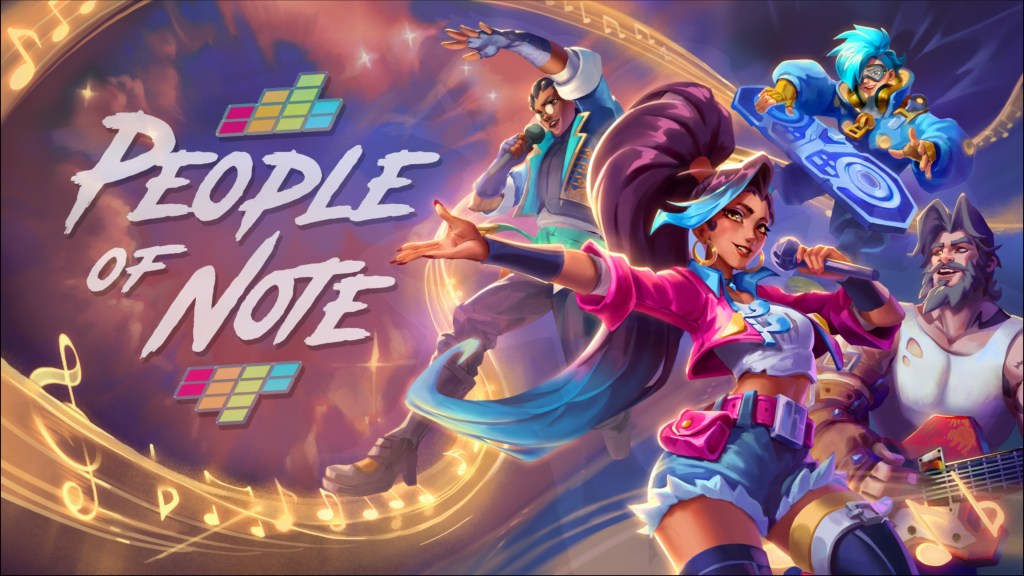
Few games commit themselves to a theme as wholeheartedly as People of Note. The most recent title from indie developer Iridium Studios is a music-themed rhythm RPG in which regions are divided by genres, combat is dictated by time signatures, and music videos are used as a tool for exposition. Musical emphasis applies to all facets of People of Note, resulting in a unique turn-based combat system with flexible build-crafting and a whole lot of tunes that don’t always hit the right note.
Our journey begins in the pop-themed region of Chordia in which our heroine Cadence is trying to win a music competition. Rebuffed for not being exciting enough, she sets out to discover other genres of music and form a band capable of winning. Along the way she uncovers a plot to rewrite the world through forbidden music and must decide between becoming a pop star or preventing the calamity. The plot is melodramatic and ridiculous but never takes itself too seriously, constantly poking fun at people who judge others based on their tastes.
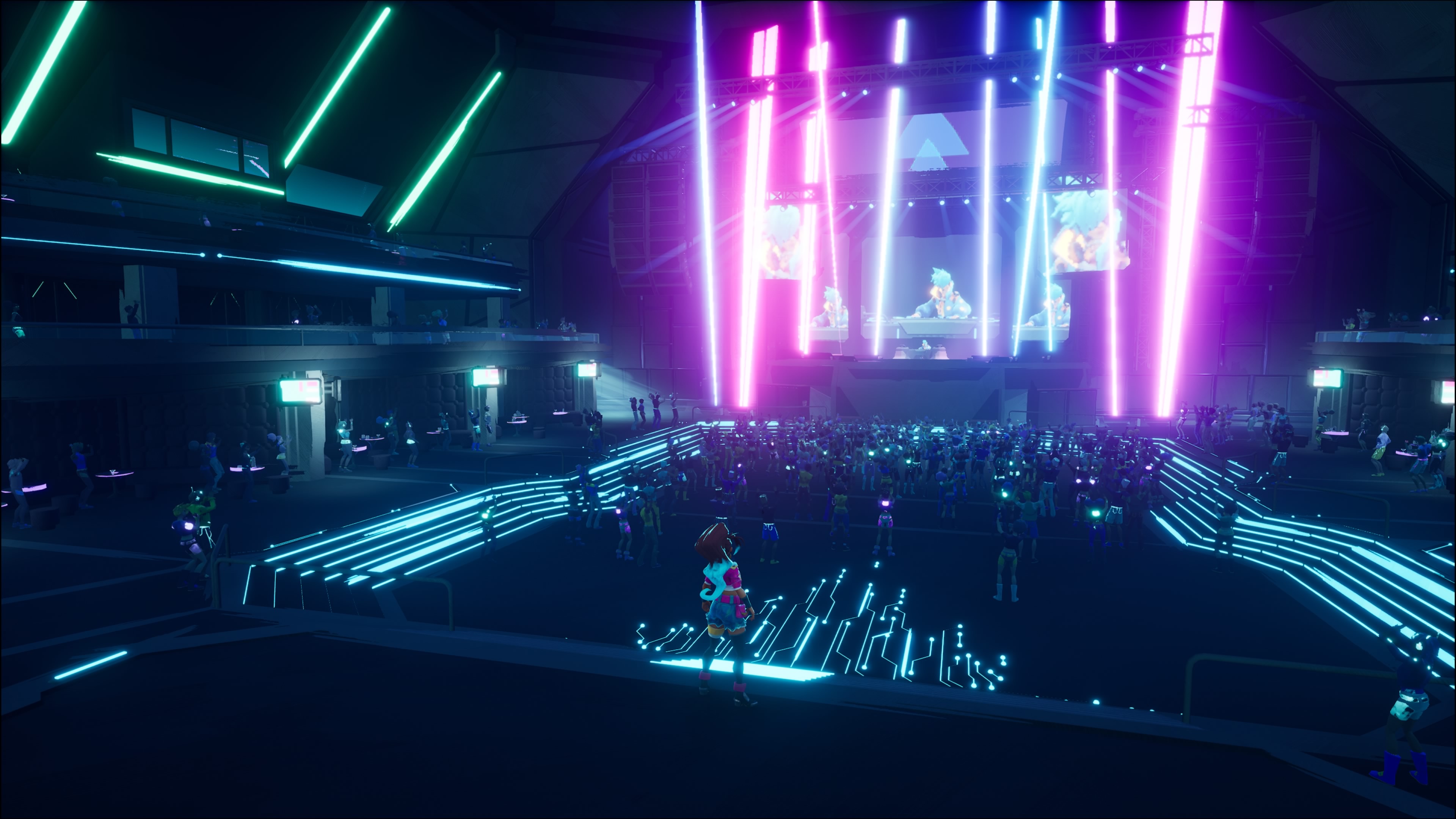
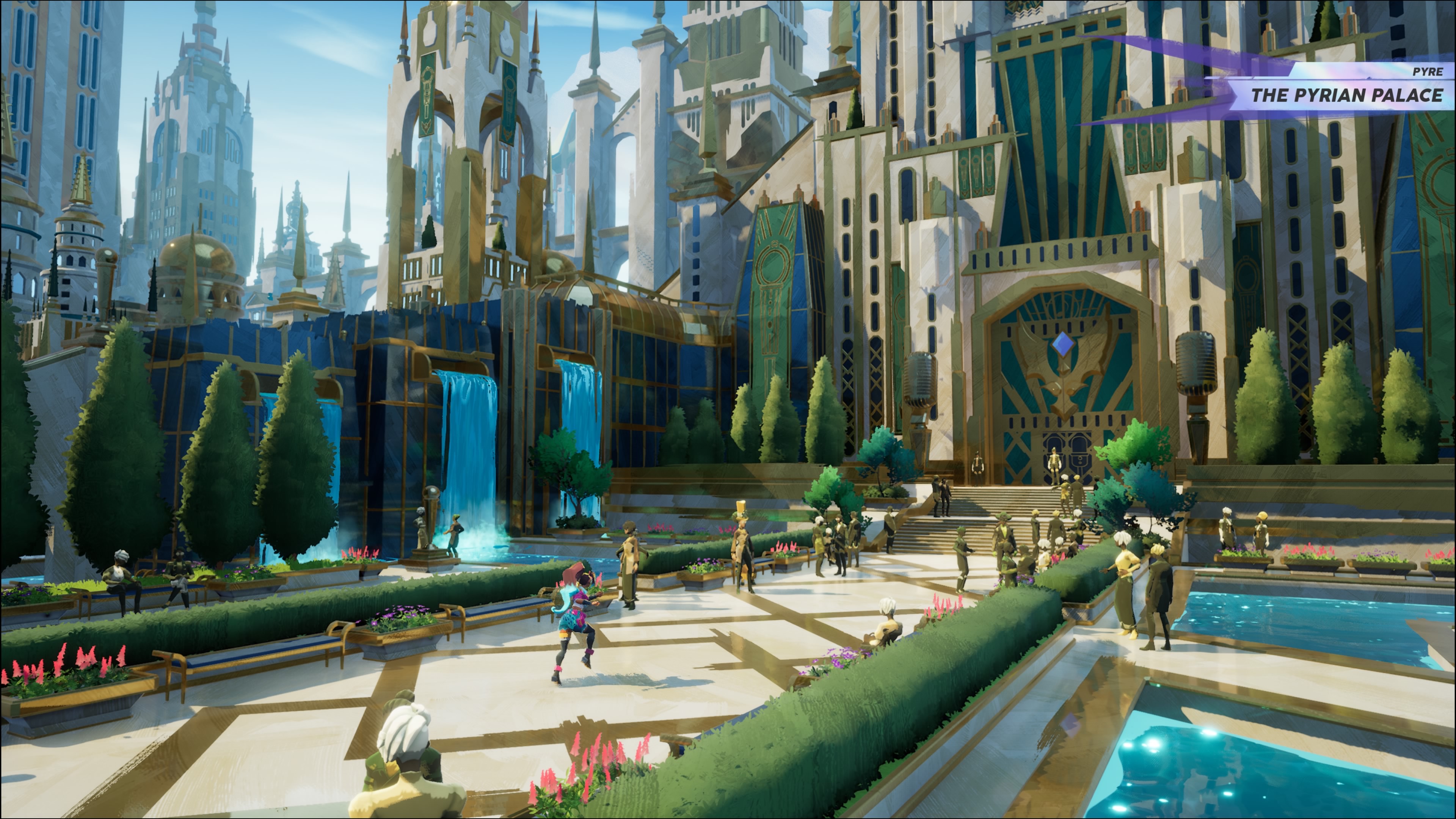
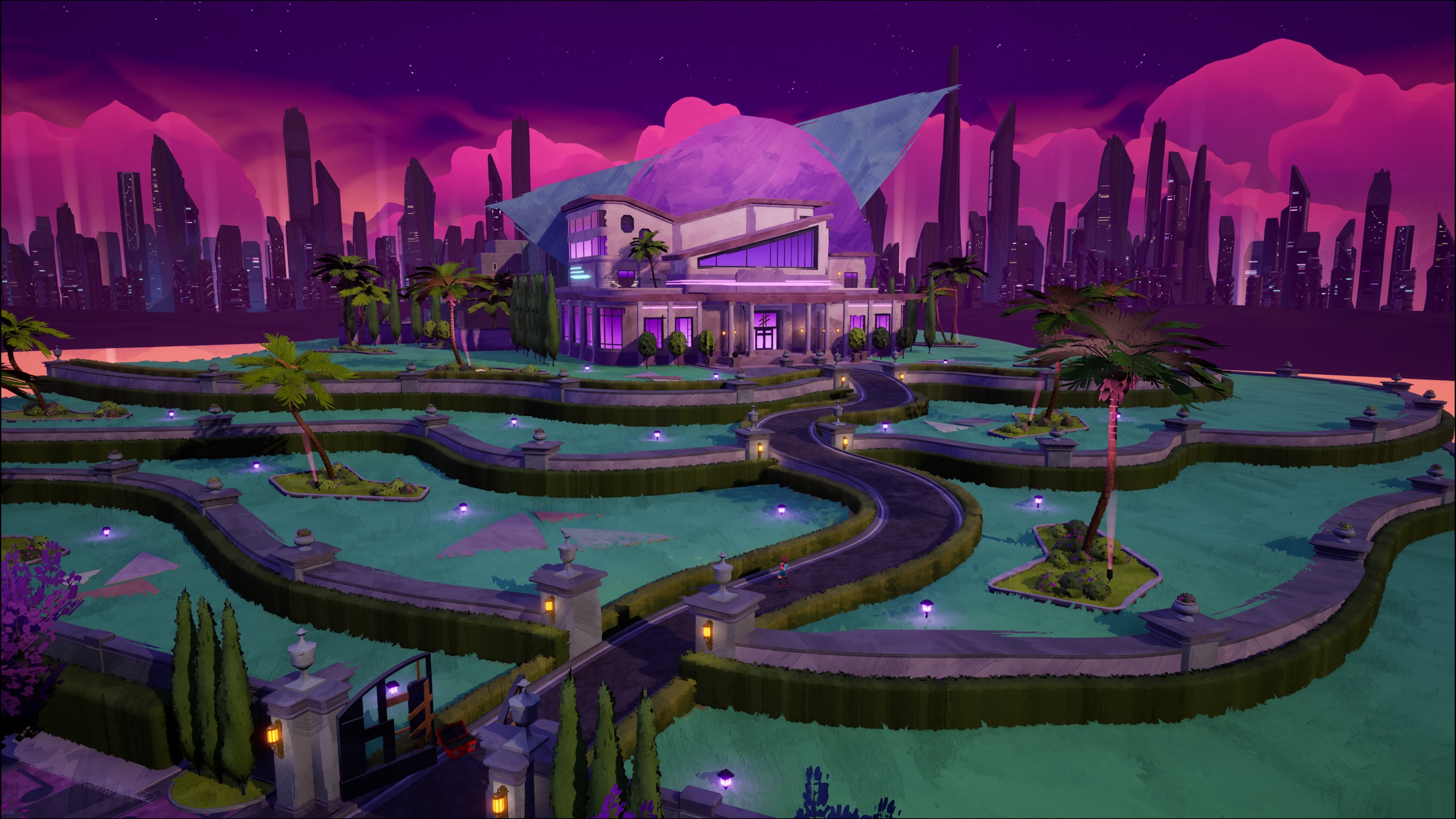
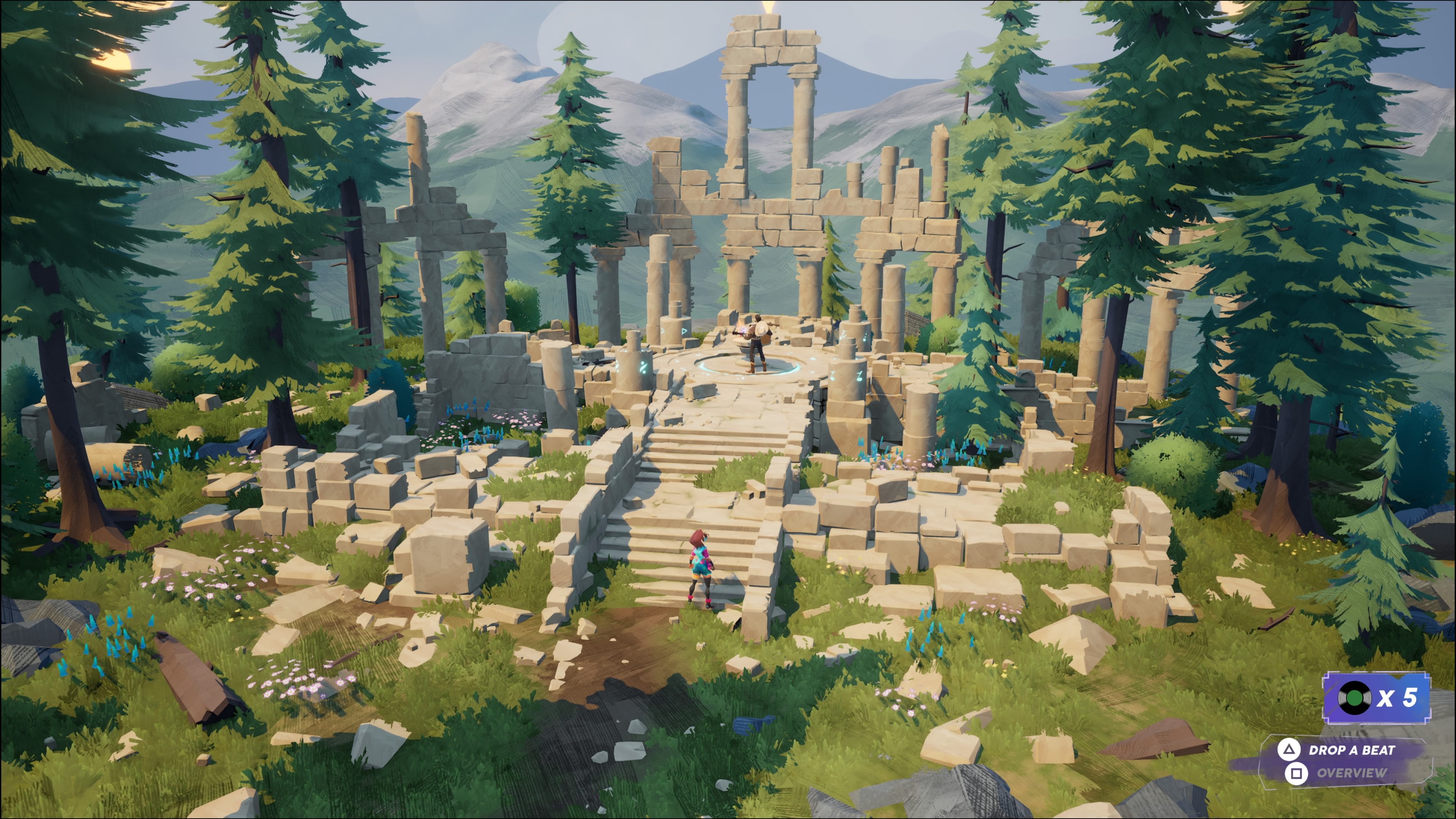
Some of the locations of People of Note (Lumina, Pyre, Chordia, Octave Range.)
Each region is fiercely devoted to their genre in all facets and expresses this through unique soundtracks and architecture. The EDM themed city of Lumina is a rain-soaked, neon-lit cyberpunk metropolis, plagued by a rave drug epidemic. The classically themed Archaia is an elitist castle city whose enormous walls physically and metaphorically reject the approach of modernity and protect tradition fiercely. Each of the eight explorable regions follows this pattern offering consistently appealing visual and auditory diversity with some mild social commentary.
While each region looks and feels different, exploring them largely follows the same pattern. Follow main quest objectives until you enter a dungeon; fight enemies and solve puzzles to find the boss; move onto the next area. Along the way there are a handful of NPCs to talk to, upgrades to find or purchase, and optional puzzle battles to attempt. Exploration itself is sometimes awkward because of a finicky camera and no map to reference, but the areas are all small and quest objectives are easy to follow so it never feels like a chore.
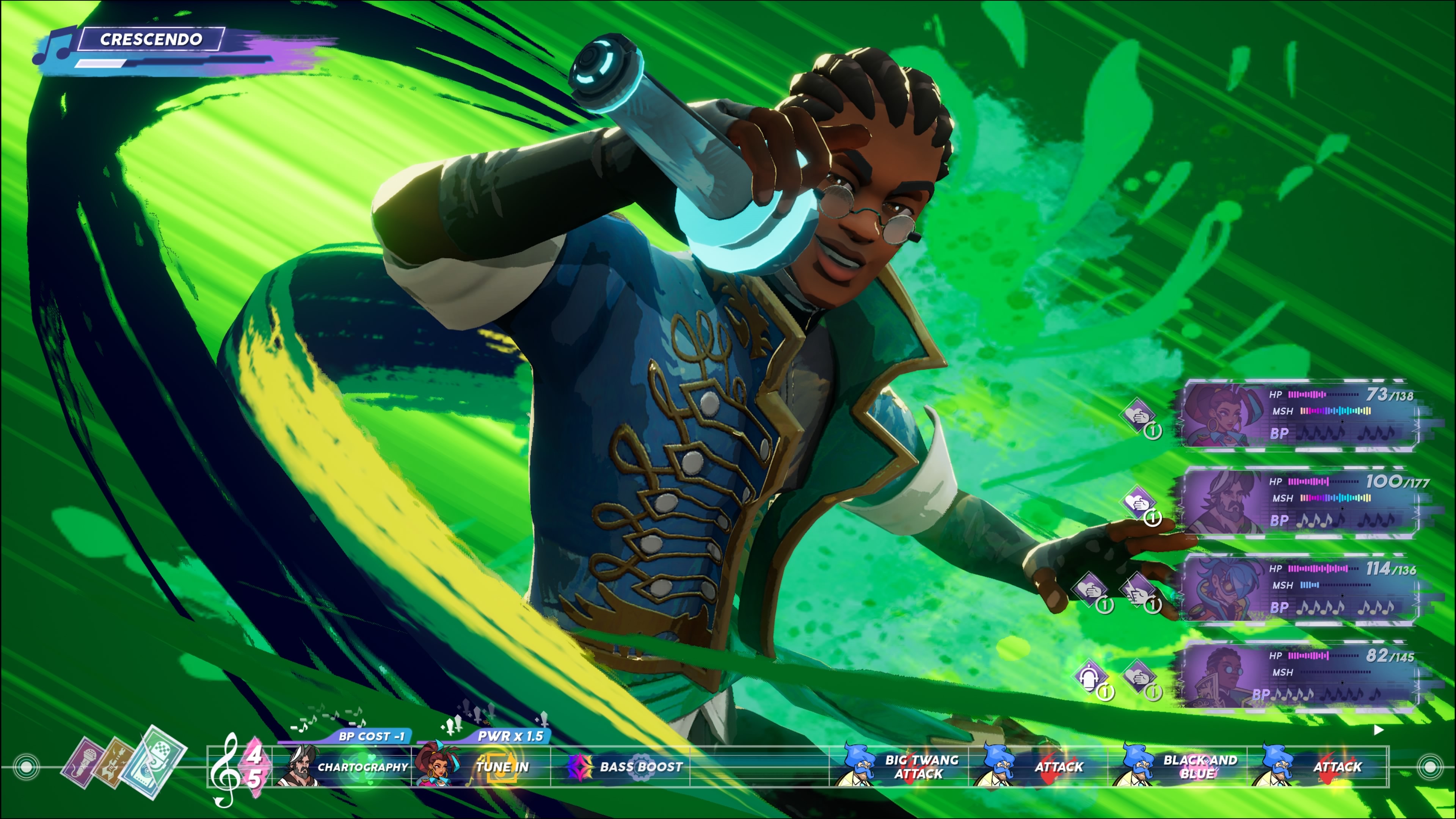
*Tip: Mashup attacks are powerful combinations between two characters. Use these aggressively for big turns as the mashup meter recharges quickly. They are best used at the start of a turn so their effects can last longer.
This loop stays fresh through the course of the game because of a compelling, thoughtful combat system with a variety of distinct enemies to fight against. The rhythm mechanics channel a bit of Expedition 33 and give bonuses based on timing attacks to the beat making combat more engaging than a typical turn-based game. Action is team-oriented and challenging with a remarkably free rhythm that offers players a lot of choice when approaching encounters. Some require a patient approach, playing defense and sequestering resources until the time is right while others need to be taken down quickly before they shut down your party and put you on the back foot.
Bosses in particular are lengthy, tactical affairs that reward careful thinking and punish overexcited players for jumping the gun. They also steadily increase in power, making actions feel deliberate and important at all times. These encounters are exceptionally entertaining and fulfilling to complete, occasionally feeling a bit drawn out but never to the point of being unfair or dull. Even when bosses took multiple attempts it was always compelling to tweak my strategy and try to take them down again.
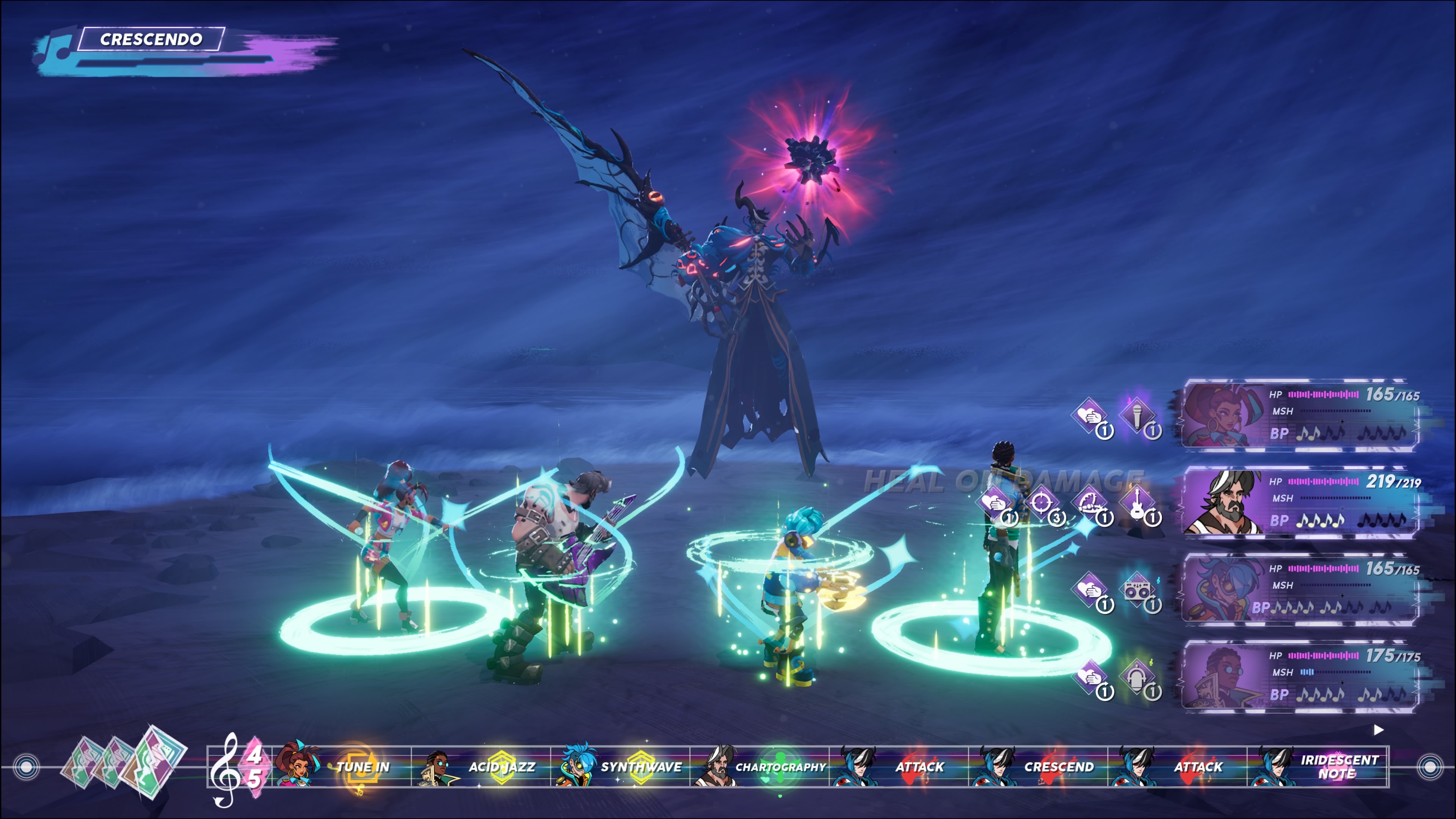
*Tip: Bosses become a lot stronger as the CRESCENDO bar fills up over time. Take risks early before they power up and play more conservatively later into the fight, so they don’t wipe out your party.
Sadly, the same cannot be said for the game’s myriad of puzzles which range from interesting, stimulating challenges to clunky, confusing conundrums. The optional battle puzzles littered throughout the game provide set scenarios in which players must use their combat acumen to address a set challenge. These are excellent, challenging puzzles which players don’t have to engage with in order to enjoy the full story. In contrast, the region-specific themed puzzles that break up dungeons are rarely enjoyable and occasionally rage-inducing. For example, the Choral Reef puzzles of the sixth area seem to require comprehensive knowledge of fluid dynamics and a touch of luck to figure out. Not at all enjoyable.
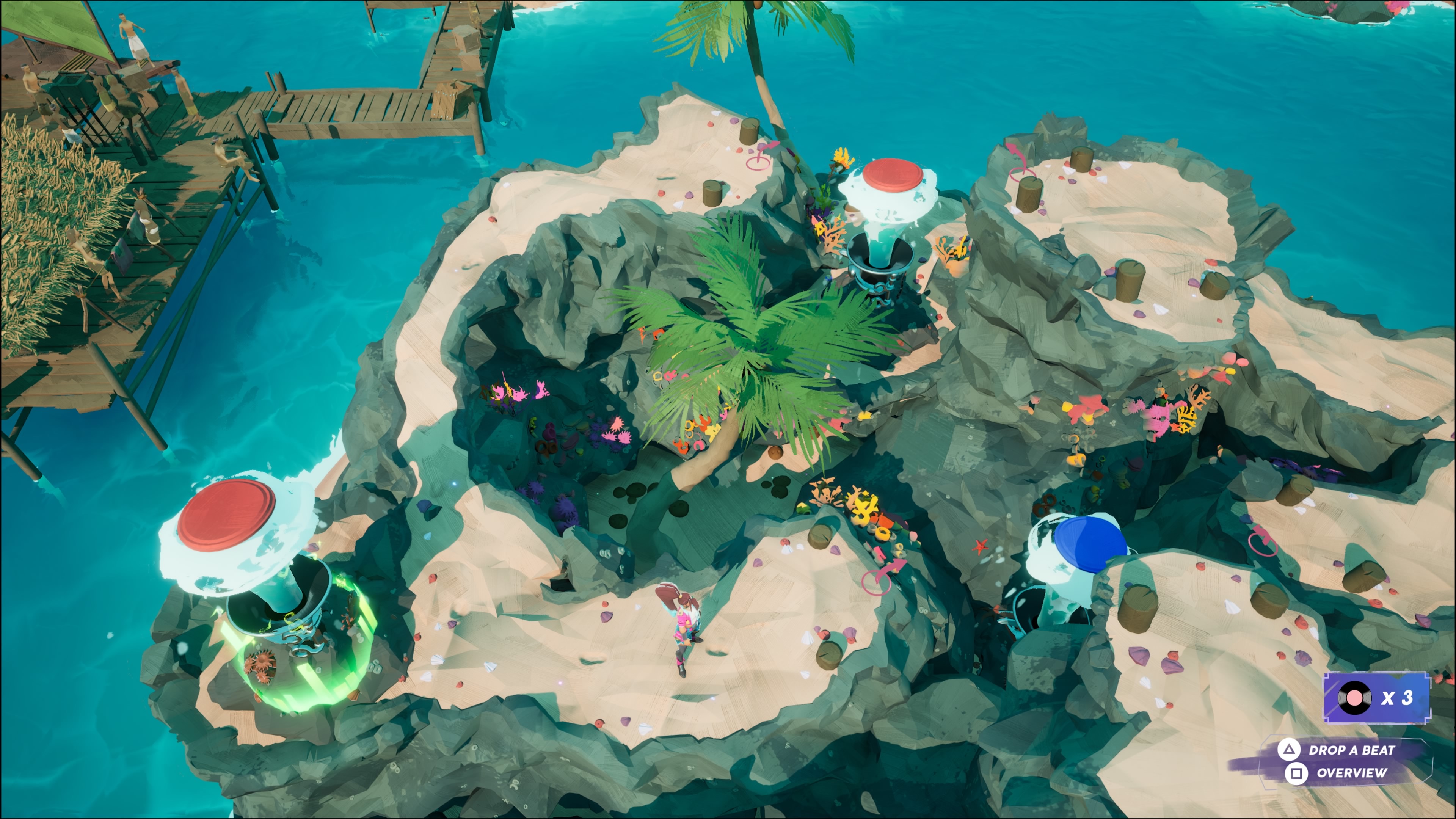
*Tip: The Choral Reef puzzles in chapter use a mechanic called Harmonization to link things together. The trick for most of these puzzles is to use harmonization to move the inactive platform into place, before turning off harmonization and moving the platform you just moved one more time. It’s a pain but you can solve most puzzles this way.
Entering a puzzle section invariably alternates between a quick, simple digression from combat to head-scratching frustration that necessitates herbal tea or some other means of relaxation away from your console. It’s worth noting that puzzles can be disabled at the start of the game for players who aren’t interested, but this is a lazy solution to the problem and actively discourages players from fully engaging with the game. While the option to disable puzzles is a welcome accessibility feature, it acts more like a bypass than a scaffold; the game would have been better served by puzzles that gave the player the same reasonable challenge of combat encounters, rather than offering an ‘opt-out’ of a core pillar.
The silver lining to these puzzle sections is that combat and character progression feel even more rewarding by comparison. Each of the four bandmates functions uniquely and can be customized to specialized in a variety of way. Each region offers upgraded gear and new abilities to try out in the form of Songstones that can be slotted into instruments. These upgrades are plentiful enough to offer flexible expression for each character without feeling overwhelming or confusing to navigate. No two players will have the exact same strategy by the end of the game and the amount of player choice available ties in well to the theme of music as a vessel for individual expression and social cohesion.
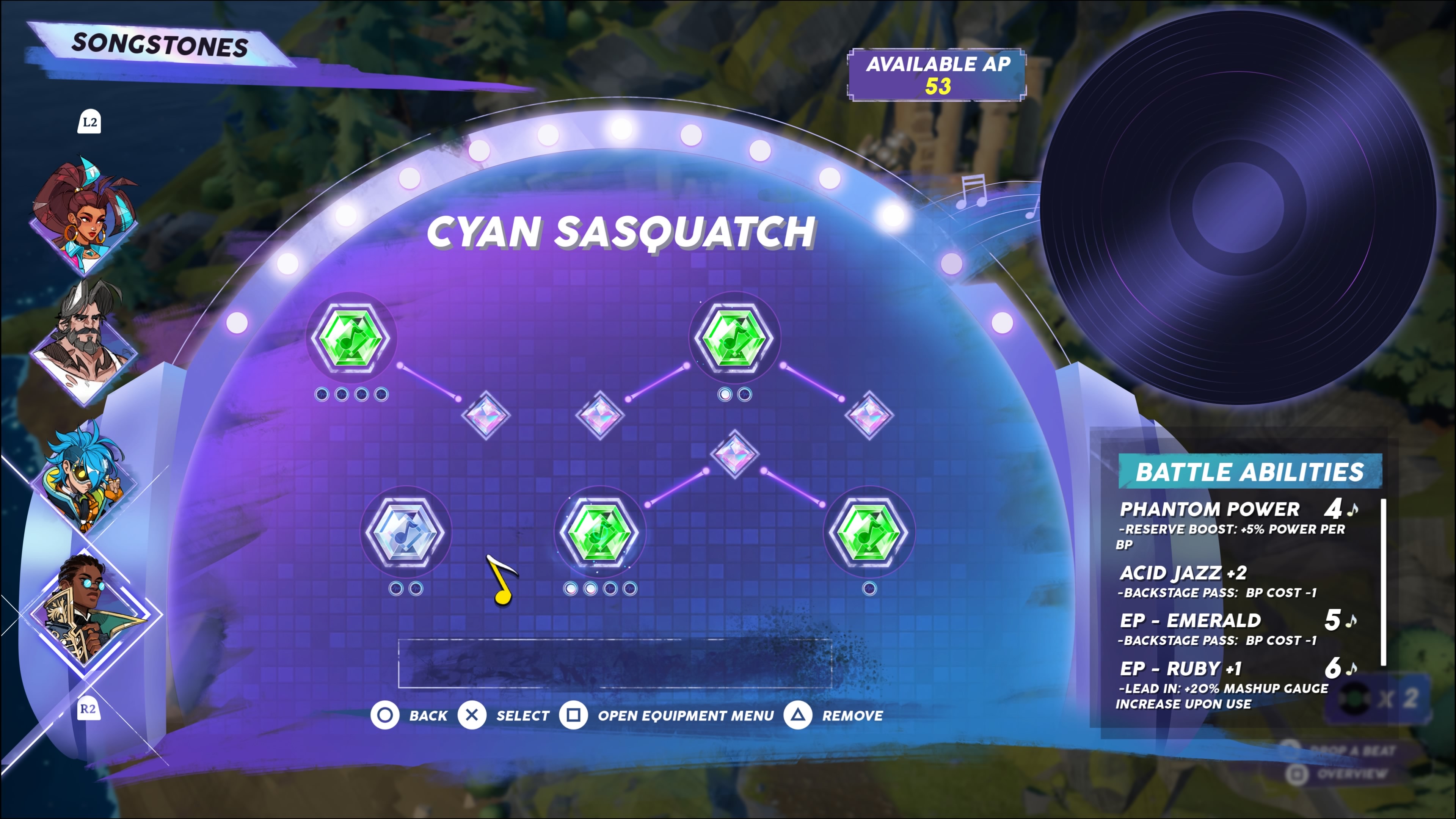
*Tip: This is an example of an instrument and the Songstones attached to it. The diamond shaped crystals modify the hexagonal crystals with a small perk. The backstage pass perk lowers the cost of an action by 1 and is exceptionally strong. Stock up on these when you encounter them in Durandia and attach them to most perks.
This theme is hammered over the course of the game and is espoused consistently by the characters without ever becoming especially poignant. Music is clearly important to these developers and the amount of care given to the theme is admirable, but the story is unable to deliver a strong enough emotional core to make us believe in the importance of it. The music itself is at its best during combat encounters as a background for the action. When the soundtrack leans into the musical formula and tries to express itself through song it falls short.
The clearest example of this comes through in the music videos that make up some of the key story moments. The songs themselves are fine, and the animations look okay, but they don’t really offer anything to the game beyond shallow novelty (because most other games don’t have music videos in them.) They range from sentimental duets that attempt to rouse emotions, to humorous jabs at boy bands & country music but never seem to come all the way together, ironically lacking in the originality present in the combat system and world design. These music videos end up being a microcosm of People of Note as a whole; shining in some respects, but failing to deliver a fully formed, consistent product.
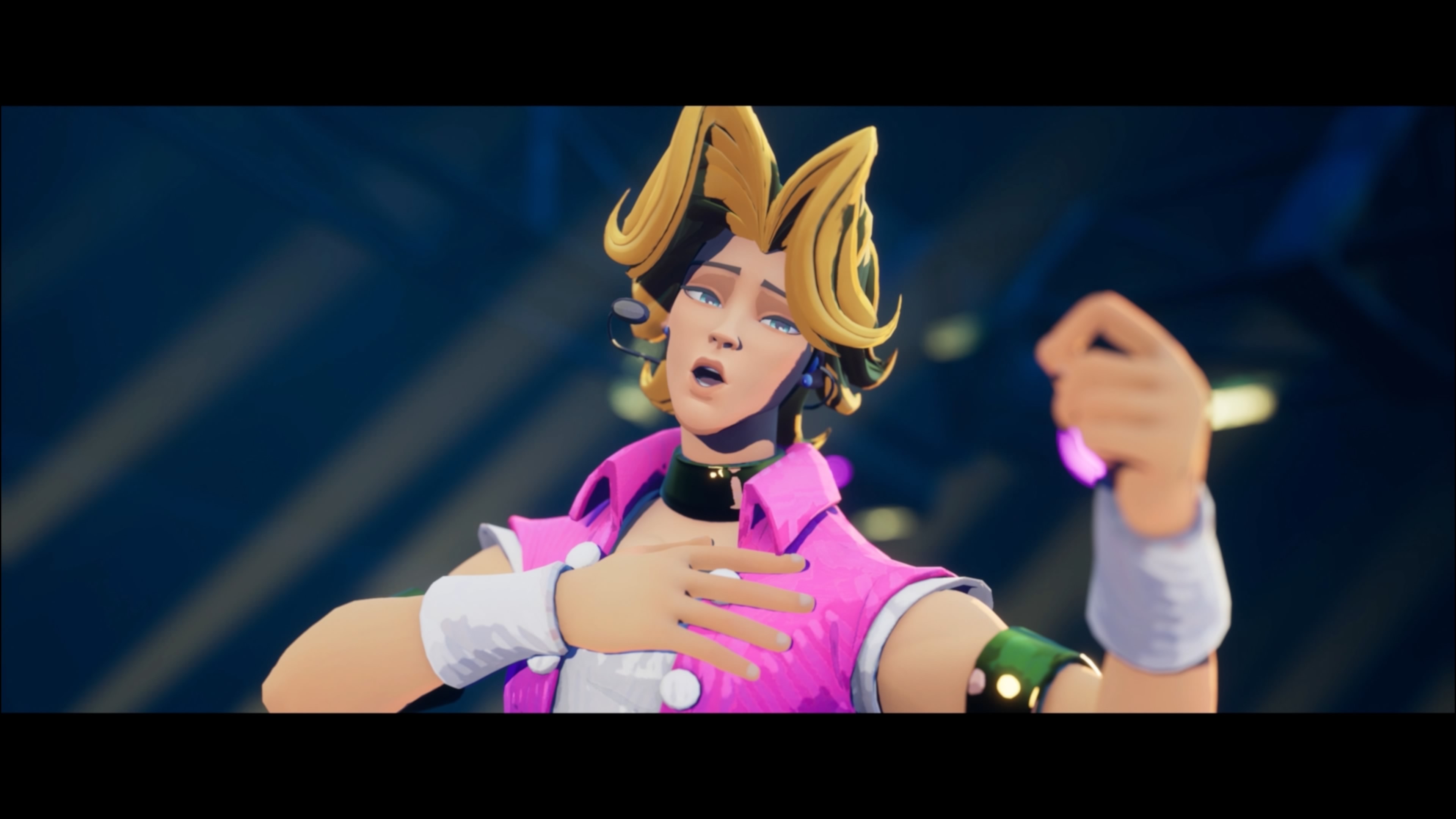
The song spoofing boy bands (“Sorry Girl”) is a funny critique of pop-music and idol-obsessed culture and a good finish to the boy band subplot.
This becomes especially apparent in the final section of the game. The last three boss fights are exceptional, separated by four frustrating puzzle sections and bookended by a music video where everyone sings together. The song is fine but didn’t leave me inspired by the power of music. The credits are really sweet and feature the game’s developers singing a song together to thank their coworkers and players for being a part of the game. This was a bit more inspirational than the prior song and felt like a nice exclamation mark on the campaign.
After the credits however, the game ends… and you have to start an entirely new campaign if you want to go back and find any secrets. It is an abrupt finish to the game that completely closes the door on anybody who wants to spend more time in this world but doesn’t want to play through an entirely new campaign. This surprising emphasis on replaying the game does make the choice to remove puzzles more understandable but it also means there is essentially zero end game content for players who want to challenge more difficult enemies.
Overall, People of Note suffers from frequent inconsistencies. Combat is genuinely great, offering players a worthy challenge and tons of opportunities for customization. The music theme applies well to the world’s look, feel, and characters, but won’t blow anyone away with its offerings. Battle puzzles are tactical, exciting thinking exercises, overshadowed by abysmal traversal puzzles. Iridium Studios has created an original RPG that is a joy to play a lot of the time and should be commended for making the musical theme apply to as many facets of the game as possible. Even if the harmonies don’t fit together perfectly, this is still an acceptable arrangement with lots to offer fans of turn-based RPGs.
Scoring Rubric:
| Category | Points |
| Combat | 18/20 |
| Story | 9/15 |
| Progression | 14/15 |
| Music/sound | 11/15 |
| Visuals | 7/10 |
| QOL | 7/10 |
| Puzzles | 5/10 |
| Exploration | 3/5 |
 JoeGames