PLAYTIME: 26 Hours REVIEWED ON: PS5
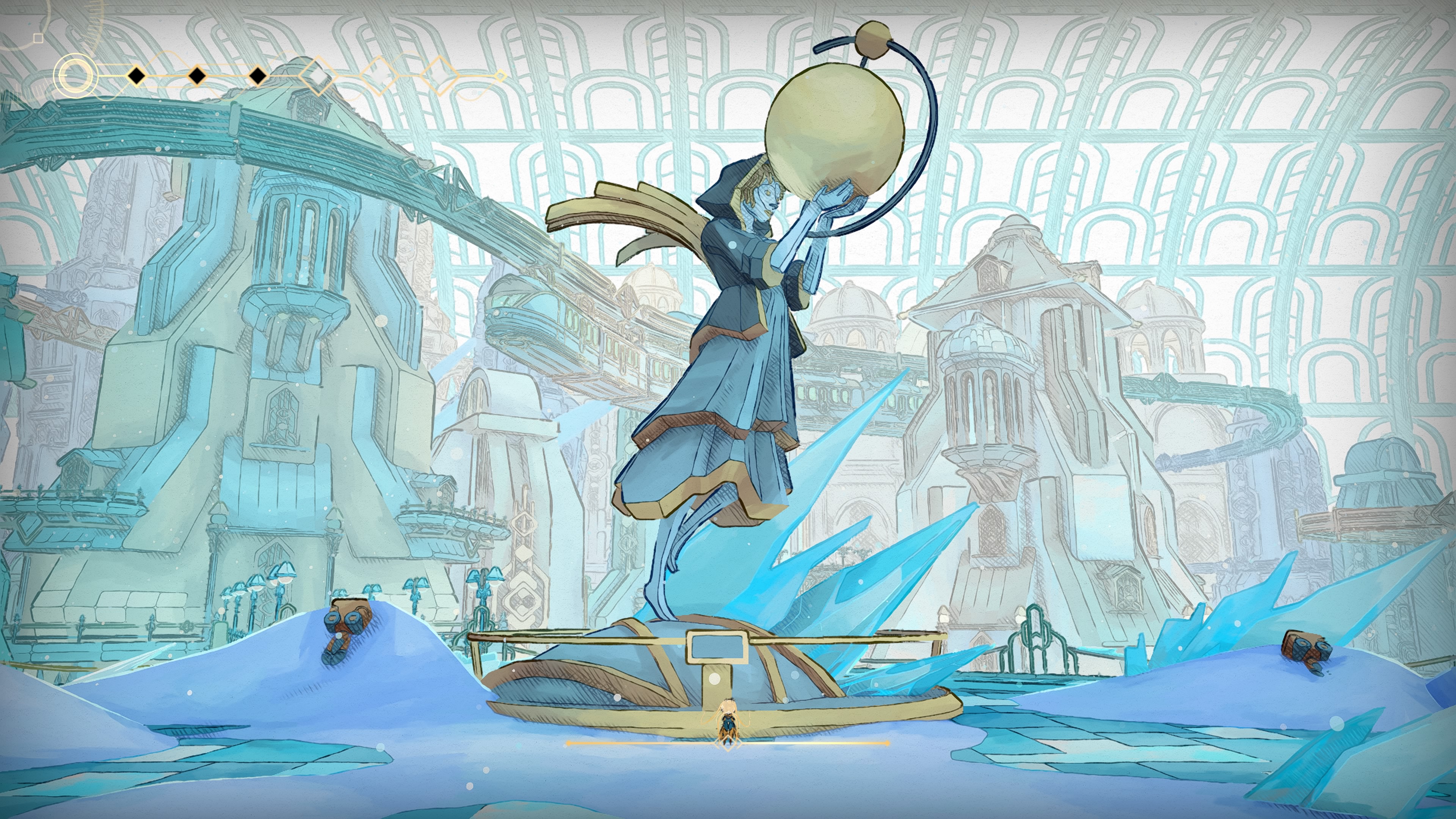
January is usually a pretty slow time of the year for new game releases as consumers & companies recover from the holiday season. MIO: Memories in Orbit excited me with its trailer but honestly, I just figured it would be something to tide me over until the big releases of February. I am happy to report that I was wrong and that MIO is one of the most charming, inventive platformers I’ve played in a long time. It will please anybody who is a fan of the Metroidvania genre, while still having lots to offer for people like me who have never been especially invested in the genre. MINOR SPOILERS AHEAD
MIO begins with a burst of light entering the body of a small robot and bringing it to life. The robot has no memories of where it came from or what its purpose is. It is encouraged by a voice in its head to keep going and begins exploring the labyrinthine location it finds itself in. After some short adventure and an early boss fight it happens upon a mysterious figure (who looks a lot like Princess Kaguya) who requests its aid. This being called Shii is the first of many robotic characters who begin to slowly illuminate the world for our voiceless protagonist. Our robot is named Mio and the world she finds herself in is a spaceship that was once populated by beings called “Travelers” searching for a new planet. Sadly, all of these travelers have perished and left their sentient robot allies behind feeling lost and confused as to what to do next. I don’t want to reveal too much of the story as it is fun to discover on your own, but it has some nice thoughts about purpose and how to rediscover it after a traumatic event.
Where MIO really shines is with its gameplay, customizability, and artistry. Our titular protagonist is acrobatic and lithe in a way that rivals other platforming greats like Celeste, Hornet, or Mario. Initially, she comes equipped with a double jump and a set of hair-like appendages that can initially be used for an explosive three hit combo. However, as you defeat bosses and explore the world this hair becomes capable of climbing surfaces, functioning as a grappling hook, and performing different attacks. In addition to this luscious flow Mio also learns how to glide and dodge enemy attacks in a puff of smoke. All of this results in dynamic platforming challenges that often feel difficult but never unfair because of all the tools you are given. The platforming is fast and responsive, forcing the player to cycle through these various abilities in order to navigate its array of different sections.
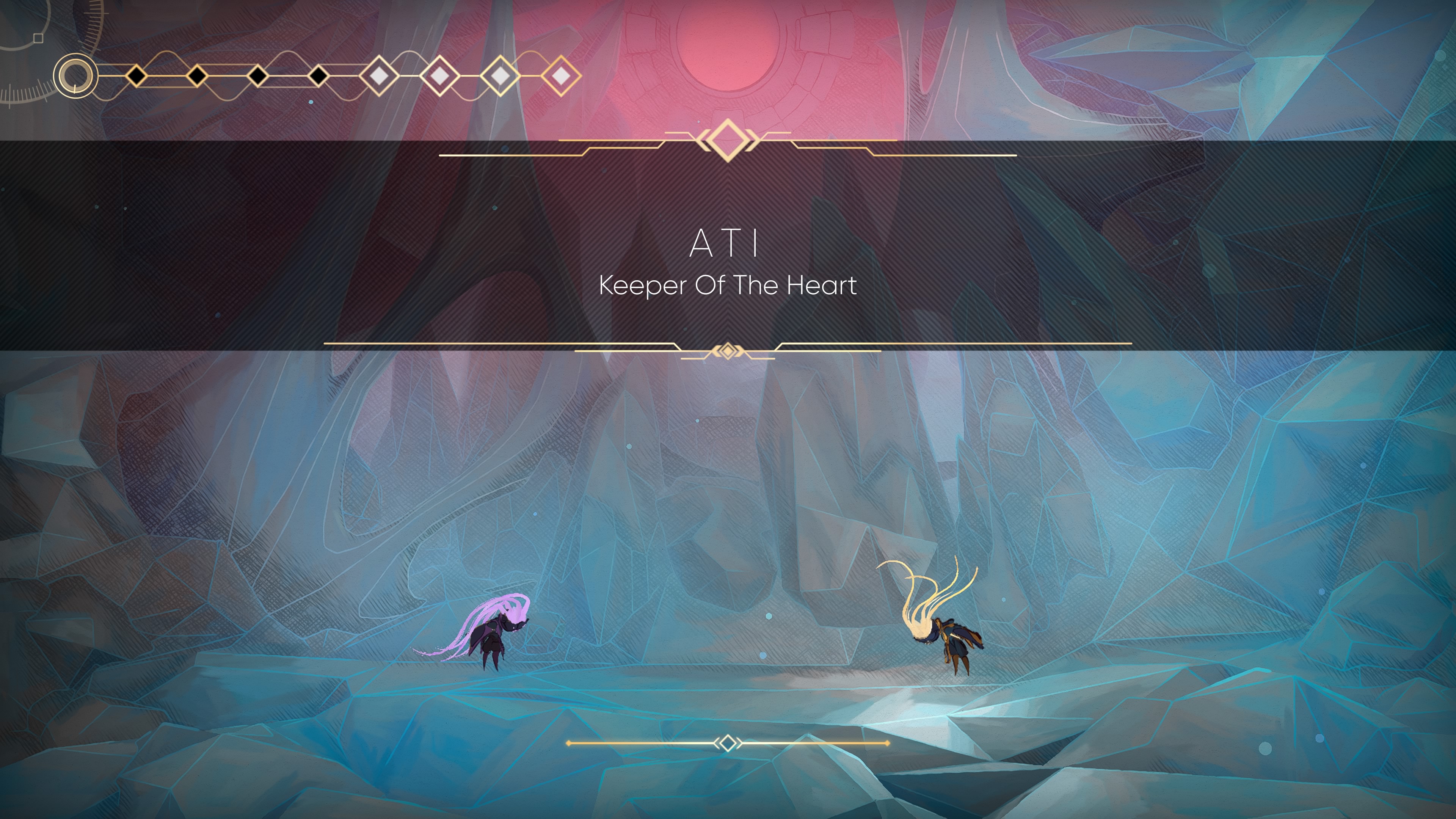
These same principles apply to a robust combat system which has the dancelike quality of Hollowknight Silksong but feels much more dynamic and varied. Some fights can be dominated by dodging enemy attacks and countering, while others necessitate climbing, grappling, or gliding past enemy attacks. The puzzle of trying to figure out how to approach each enemy is consistently entertaining. There are a variety of enemies with tricks to learn but the combat really shines in boss encounters. All of these bosses are challenging, and most took me multiple attempts to figure out and defeat.
Luckily, Mio comes equipped with a variety of modifications which can be mixed and matched to give different capabilities and perks in combat. The number of slots available for these modifications is limited and some take up more space than others, but all have some inherent value. Aside from a modification which allows you to see your health bar, most of these need to be discovered through exploration or purchased from the shopkeeper. Early on you get things like a stronger combo finisher, increased currency from defeated enemies, or an extra heart for your life total. The decision on which of these to take into each fight adds an extra layer of customizability and choice into combat. Some bosses were too fast to consistently complete combos against, so I opted for increased dodge time. Others flew around the screen out of the reach of my tiny body and necessitated the use of a more offensive grapple. There are more than 30 of these modifiers to discover and while this isn’t an RPG it does give an air of build crafting and choice into the game.
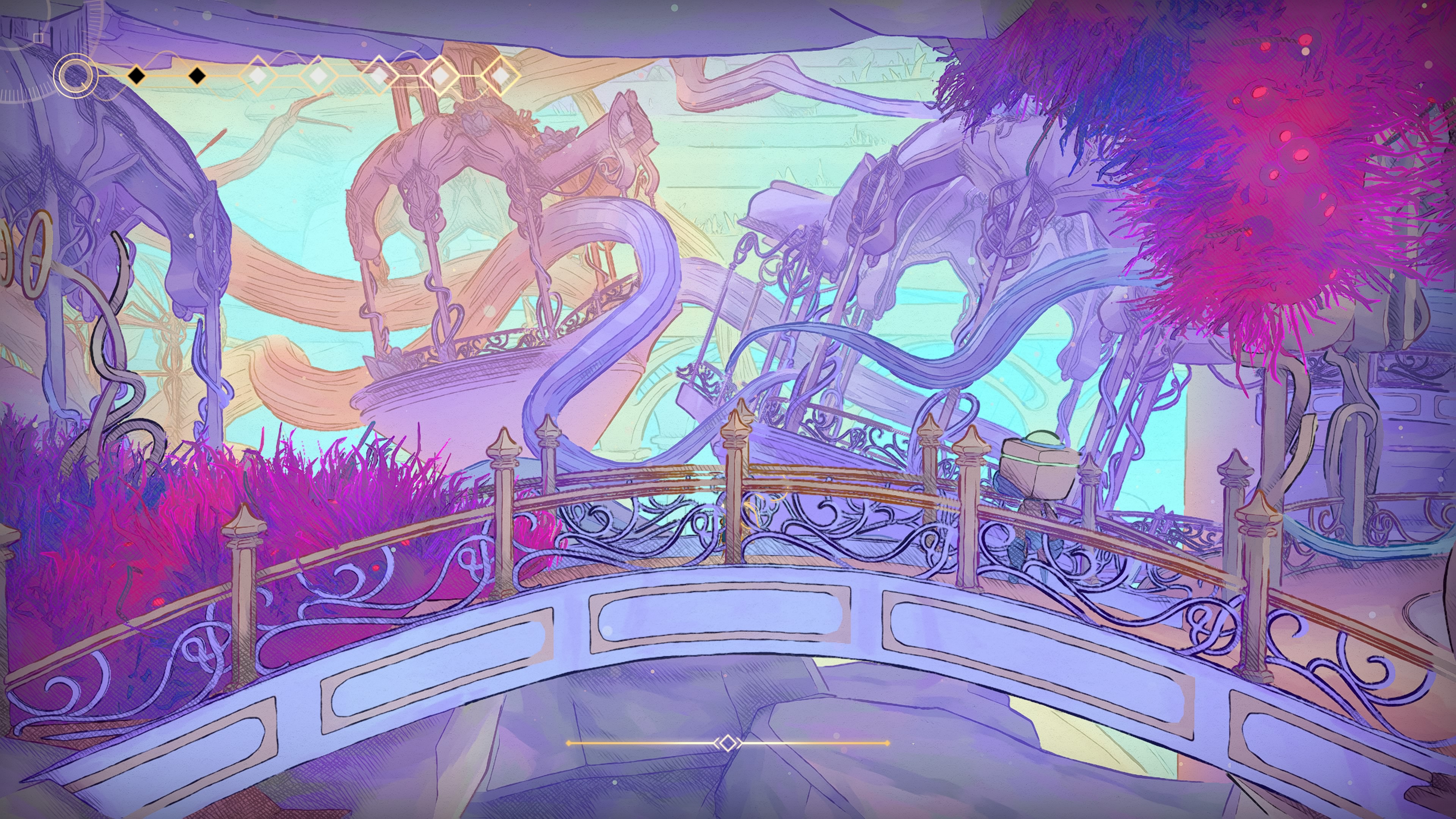
In addition to its combat and platforming MIO deserves a lot of praise for its artistry and presentation. The backgrounds are extremely well drawn and diverse with highlights including an opulent metropolis, a frightening factory, and a lush jungle. The music is also a highlight and is typically melodic and peaceful but shows its diversity with some great rock, and hip-hop themes for different characters. I also enjoyed the enemy designs and found them consistently unique, and entertaining. This is a gorgeous game that had me itching to explore and see what came up next.
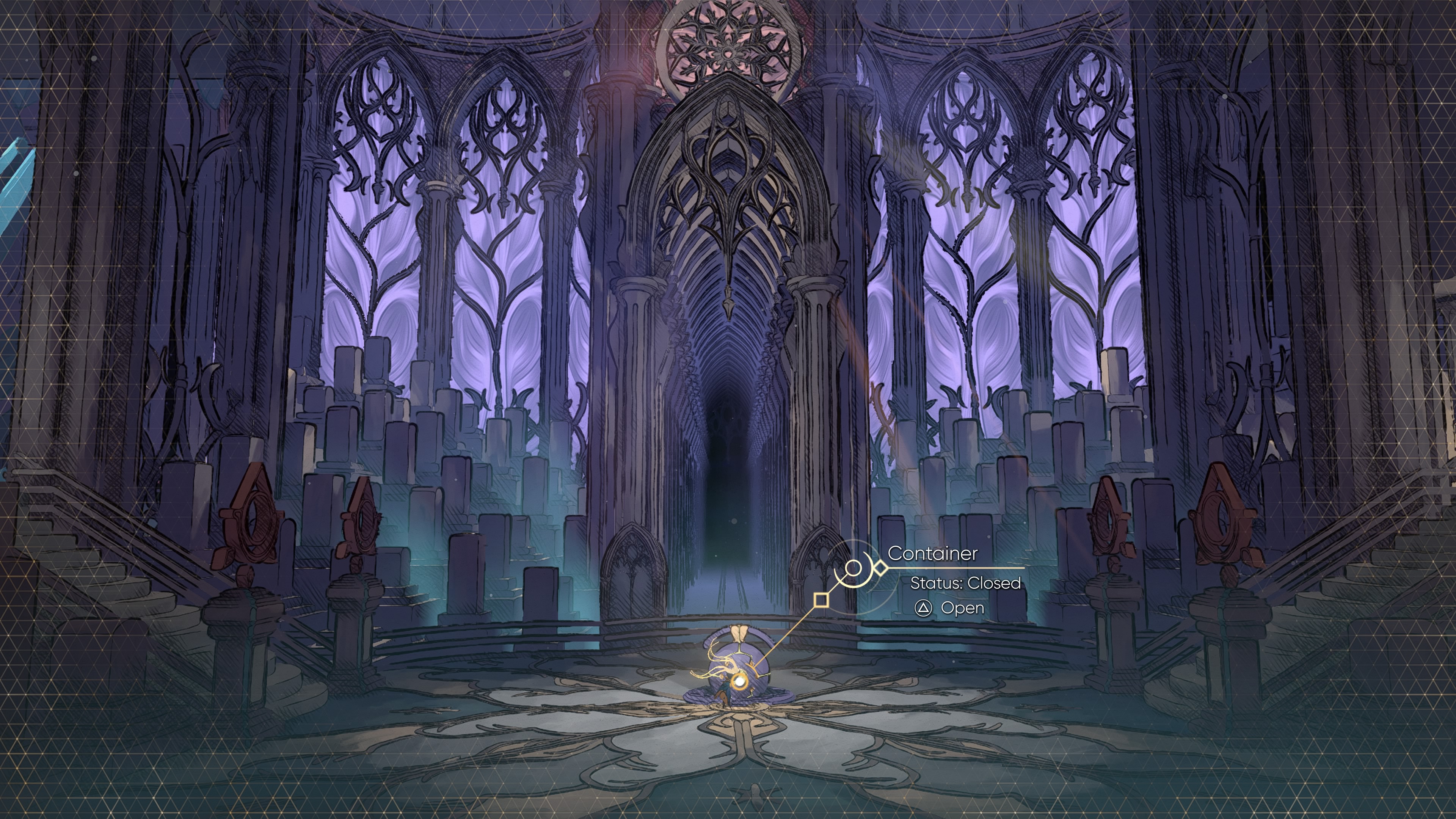
The number of positive things about this game greatly outweigh the negatives but there were still some sections that had me scratching my head because of their tedium. Metroidvanias are well known for their difficulty and constant backtracking, and MIO is no exception. While it wasn’t ever stifling there are small things like every boss having a short, unskippable cutscene before for their encounter. With many bosses this is a minor issue but with the more difficult ones (the final boss in particular) this animation was discouraging as I constantly died. The same is true for the small platforming puzzles between some bosses and the spawn area. These are never especially difficult but losing one of my precious hearts in a small section before a boss required me to restart and added time into the game that made me want to take a break. It took me around 25 to roll the credits for the game and at least one hour was spent in tedium (which really isn’t much but still come on).
The first 10 hours of this game were amazing and had me hooked like few other platformers ever have. However, around this time is when you first descend into “The Lab” wherein the games difficulty & mazelike structure become especially grating. This is a section ruled by a very compelling character called The Hand that brings out some of the best of MIO but all of the worst as well. For starters, the majority of MIO is navigable with a pretty generous fast travel system and platforming sections that can be completed forward and backwards. Unlocking fast travel between the lab and the rest of the map takes a long time (and is optional) so the first 5 or 6 times you enter the lab you have to take an elevator. The first time I took this minute long ride I was blown away by the visuals of the background and didn’t mind the short wait. However, the lab was a difficult section for me and by the tenth elevator ride I couldn’t believe they had made it unskippable. Add in the fact that the lab is full of branching paths that do not show up on your map as well as numerous sections that do not allow you to backtrack and you have a recipe for angry gamers.
In a particular section in the lab your shopkeeper (the only reliable source for upgrades) is kidnapped and hidden away. Finding them is not too much of a chore and features a fun boss but you are unable to procure any upgrades during this time and when they are rescued their shop has changed and anything you had not purchased before their abduction is unavailable for purchase. Lots of these upgrades would have helped a lot in the later sections and losing out on them was a bummer. In MIO there are two kinds of currency: Nacre is a ubiquitous resource accrued from defeating enemies while Pearls are difficult to find and are often a reward for difficult platforming sections. When the shopkeeper abruptly disappeared, I had finally stockpiled enough pearls to purchase some meaningful upgrades. What I ended up purchasing was not nearly as rewarding, and I would recommend other players to constantly prioritize spending pearls as soon as you can to avoid this issue.
In general, MIO’s performance was amazing on my PS5 but it did crash three times and kick me out of the game. Two of these crashes occurred right after a difficult boss and forced me to replay them which was disheartening and contributed to my general malaise towards the latter half of the game. Hopefully this will be patched out and isn’t an issue for other players.
Despite these complaints I still feel that MIO’s gameplay, exploration, customizability, and artistry are all deserving of great praise. While the game is difficult it never feels unfair, and defeating difficult bosses or completing platforming sections was always rewarding. The vast majority of my time spent with this game was fulfilling, joyous, and invoked a sense of wonder at what developer Douze Dixiemes created. This is my favorite Metroidvania I’ve played (sorry Hollow Knight) and was definitely the most interesting thing I played this January. For anybody who is a fan of artistic games, dynamic platforming, and exploring a unique world I can’t recommend MIO enough. I can’t wait to see the next thing Douze Dixiemes puts out, and I look forward to exploring this rich world more.
SCORE: 83/100
 JoeGames